Adulting Skills Made Simple: Money, Communication & More

Essential Adult Skills Guide: Budgeting, Communication, Media Literacy, and Life Management
Confidence in everyday adulthood comes from a handful of learnable skills: managing money, communicating clearly, navigating information online, and running a home and schedule without constant stress. This guide breaks those skills into practical routines, templates, and small habits that compound into stability—whether starting out, catching up, or resetting after a life change.
The core adult skill set (and why it feels hard at first)
Adulting rarely fails because of a lack of intelligence or “willpower.” Most adult skills are systems, not traits: simple steps repeated on a schedule beat motivation every time. When life feels hard, it’s often because the system is missing, not because you’re “bad at it.”
- Four pillars: money management, communication, media literacy, and life administration.
- Common blockers: inconsistent routines, unclear priorities, avoidance of uncomfortable tasks, and information overload.
- A 30-day approach: pick one small habit per pillar and track it weekly so you can adjust without starting over.
Budgeting basics that actually stick
A sustainable budget starts with clarity, not restriction. First, build a baseline snapshot: take-home income, fixed bills, minimum debt payments, and true essentials (groceries, gas/transit, basic household needs). This gives you a realistic “floor” before you decide on goals.
- Choose one rule set and keep it for one month before tweaking: 50/30/20, zero-based, or a simple “bills first then goals” method.
- Build a “busy life” budget by adding sinking funds for irregular costs (car repairs, gifts, annual subscriptions). Estimate the yearly total and divide by 12.
- Set two guardrails: a weekly discretionary limit (fun money) and an account balance threshold that triggers a pause before spending.
- Automate on payday: bills, minimum debt, and savings—even if it’s small—so progress happens without constant decision-making.
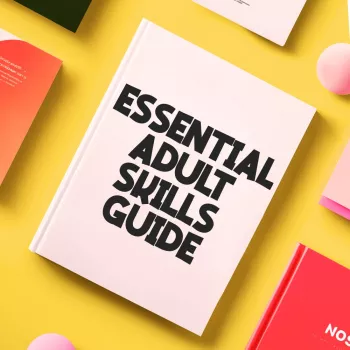
If you want step-by-step budgeting templates you can reuse, the Essential Adult Skills Guide | Budgeting, Communication, Media Literacy & Life Management Tips for Everyday Success is built around repeatable checklists rather than complicated theory.
For additional budgeting tools and consumer-friendly guidance, the Consumer Financial Protection Bureau (CFPB) budgeting resources are a solid reference.
Debt, saving, and financial protection in plain steps
Financial stability is less about perfection and more about protection. The goal is to make a bad week (or month) survivable without turning it into a multi-year setback.
- Emergency fund: start with $500–$1,000, then build toward 1–3 months of essentials when possible.
- Debt payoff structure: pick avalanche (highest APR first) or snowball (smallest balance first) and commit for 90 days before re-evaluating.
- Credit health basics: pay on time, keep utilization low, and check credit reports for errors.
- Insurance checklist: health, renters/home, auto, and beneficiaries where applicable; store policy numbers and logins in one place.
- Fraud prevention: strong unique passwords, a password manager, two-factor authentication, and a monthly account review.
To sharpen scam awareness as part of your financial “defense system,” use the Federal Trade Commission (FTC) scam-avoidance guides to learn common patterns and red flags.
If your main focus is a deeper money track—budgeting, saving, investing basics, and debt strategy—consider Personal Finance Made Easy Ebook – Budgeting, Saving, Investing & Debt Management Guide for Financial Freedom.
Communication skills for work, relationships, and everyday tasks
Clear communication is an adult superpower because it reduces rework, resentment, and stress. The secret is structure: say what you mean, make the next step obvious, and confirm timing.
- The clarity formula: state the goal, give one or two key facts, propose next steps, and confirm the timeline.
- Boundaries without conflict: say what is possible, what isn’t, and what will happen next (example: “I can do X by Friday; I can’t do Y this week.”).
- Repair and accountability: acknowledge impact, name the change, and set a follow-up point (“I’m going to do Z; can we check in next Tuesday?”).
- Difficult conversations: choose the right time, stick to one topic, and avoid “always/never” language that escalates defensiveness.
Practical scripts that help in real life:
Media literacy for everyday life online
For a straightforward framework to assess online information, the Stanford History Education Group’s Civic Online Reasoning resources are widely cited for practical verification habits.
Life management systems that reduce chaos
When you’re also juggling family schedules, shared routines matter. The Stronger Together: Family Bonding Pack can complement life planning with ready-to-use connection activities and checklists.
A simple weekly checklist to practice adult skills
| Area | Task | Frequency | Time needed |
|---|---|---|---|
| Money | Review account balances and upcoming bills; set a weekly spending limit | Weekly | 10–15 min |
| Money | Transfer to savings/sinking funds (even small amounts) | Weekly or payday | 2–5 min |
| Communication | Send needed follow-ups (work, appointments, requests) using a clear next-step message | Weekly | 10–20 min |
| Media literacy | Clean up feed: unfollow low-quality sources; save 1 reliable source list | Weekly | 5–10 min |
| Life admin | Plan the week: calendar check, meals, errands, one maintenance task | Weekly | 20–30 min |
Putting it together: a 30-day plan for steady progress
Tools that make these skills easier to practice
A structured guide turns vague goals into checklists, scripts, and routines you can repeat without overthinking. For an all-in-one approach that covers budgeting, communication, media literacy, and life management, see the Essential Adult Skills Guide | Budgeting, Communication, Media Literacy & Life Management Tips for Everyday Success. For a money-focused deep dive, Personal Finance Made Easy Ebook – Budgeting, Saving, Investing & Debt Management Guide for Financial Freedom is a practical next step.
FAQ
What are the essential skills of an adult?
The essentials fall into four learnable categories: money management (budgeting, saving, debt), communication (clear requests and boundaries), media literacy (evaluating sources and claims), and life management (calendar, documents, routines). Small systems in each area create stability faster than trying to “get motivated” all at once.










Leave a comment