Easy Cat Enrichment Ideas: Hunt, Climb, Scratch Daily
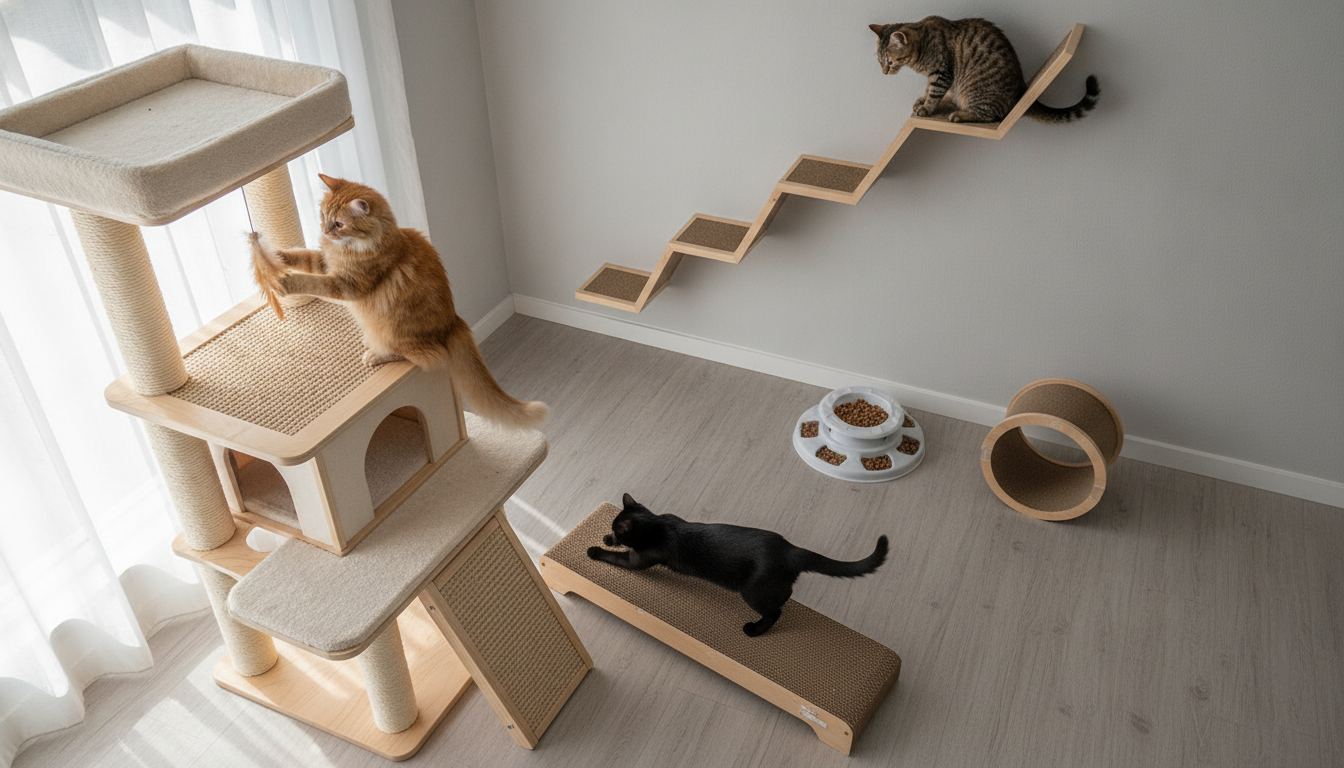
How do I create enrichment for my cat?
Cat enrichment is about giving your cat safe ways to hunt, climb, scratch, explore, and rest—using simple changes that fit your home and your cat’s personality. A good plan mixes physical activity, mental challenges, and choice (your cat gets to opt in or walk away), which helps reduce boredom behaviors like excessive meowing, scratching furniture, or ambush play.
Start with “hunt” activities every day
Use wand toys, rolling toys, or small tossable toys to mimic prey. Aim for 5–10 minutes, 1–3 times daily, and end with a small treat or meal to complete the hunt-eat cycle. Food puzzles, lick mats (cat-safe), or scattering kibble in a snuffle-style mat also turn meals into a game.
Add vertical space and hiding options
Cats feel secure when they can get up high and also tuck away. Create routes with cat trees, sturdy shelves, window perches, or even cleared bookcase levels. Add “safe caves” like a covered bed, a box with a towel, or a carrier left open with a soft blanket so your cat can choose quiet time.
Offer scratching variety (and make it easy to say yes)
Provide at least two scratching surfaces in different areas: one vertical (post) and one horizontal (pad). Place a scratcher near sleeping spots (cats like to stretch and scratch after resting) and close to any furniture your cat targets. A light sprinkle of catnip or silvervine can help new scratchers win attention.
Rotate, refresh, and keep it safe
Instead of leaving every toy out, rotate a small set every few days to keep novelty high. Inspect toys often for loose strings, cracked plastic, or stuffing leaks, and supervise any string-based play. For solo enrichment, choose sturdy, simple items your cat can’t swallow or tangle in.
Make enrichment match your cat
Shy cats often prefer predictable routines, puzzle feeders, and gentle play in smaller spaces. Bold cats may enjoy new climbing spots, training with treats (sit, touch, hop onto a mat), and supervised harness time. For more ideas and step-by-step options, visit the full guide on cat enrichment.
FAQ
How often should I rotate cat toys?
Rotate every few days to once a week, keeping only a small selection available. Reintroducing “rested” toys makes them feel new and can increase play without buying more items.












Leave a comment