Easy Family Bonding Ideas: At-Home & Outdoor Checklist
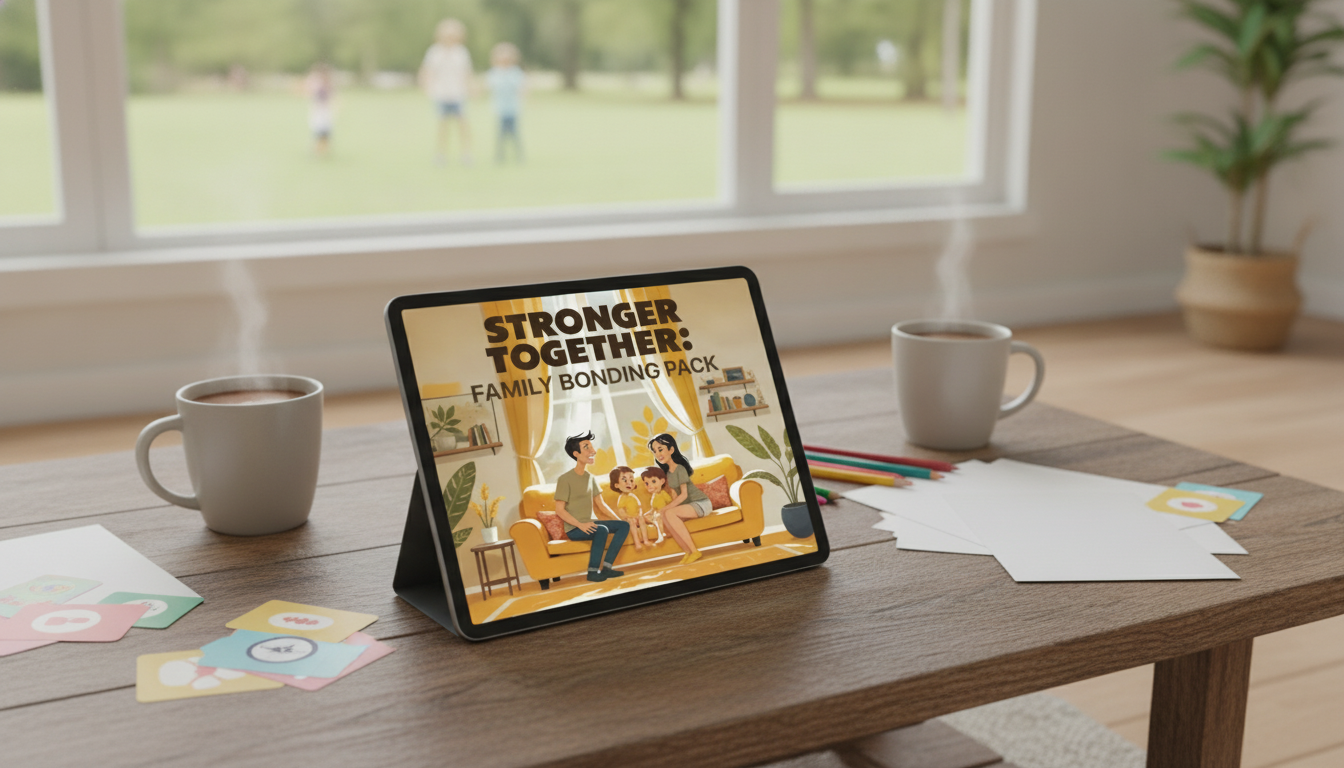
Stronger Together: Family Bonding Pack for Meaningful At‑Home and Outdoor Connection
Busy schedules can make family time feel rushed or inconsistent. The Stronger Together: Family Bonding Pack is a digital activity guide designed to help kids and parents connect through simple, repeatable moments—mixing printable at-home ideas, outdoor connection prompts, and a practical checklist that turns “someday” bonding into a doable routine.
Small interactions add up. Research on “serve and return” shows that responsive back-and-forth moments support healthy development and connection over time (Harvard University Center on the Developing Child). This pack is built for those small wins—especially on the days when energy is low and decision fatigue is high.
What’s Included in the Stronger Together Family Bonding Pack
This digital pack is designed for real life: quick access, low prep, and easy to repeat.
- Digital family activities guide that works on-screen or printed for fast, no-fuss use.
- Printable at-home connection activities for weekdays, evenings, and low-energy days.
- Outdoor activities that build teamwork, curiosity, and conversation without special gear.
- Family time checklist to plan, track, and rotate ideas so one person doesn’t carry the mental load.
- Flexible structure: pick one activity or build a weekly rhythm—no “perfect” schedule required.
If your household already uses digital guides, you may also like pairing it with practical life-readiness resources such as the Essential Adult Skills Guide for older kids/teens who enjoy taking on “helper” roles and learning real-world routines alongside family connection time.
Who This Pack Works Best For
- Families with kids who do better with clear choices and visual prompts (printable pages support this).
- Parents looking for low-prep connection ideas that don’t require crafts, purchases, or extensive cleanup.
- Caregivers who want activities that fit different ages by adjusting roles (leader/helper, timer/recorder).
- Families aiming to reduce screen-heavy downtime by adding a few intentional “together” moments.
- Co-parents or blended families who benefit from shared routines and neutral, guided prompts.
Quick Fit Check: When to Use Each Type of Activity
| Situation | Best Activity Type | Why It Helps |
|---|---|---|
| Weeknight with little energy | Short at-home prompt | Keeps connection consistent without a big time block |
| Weekend morning | Outdoor activity | Builds shared memories and lowers stress through movement |
| Siblings arguing | Team challenge | Shifts everyone into a shared goal with clear rules |
| Child feeling withdrawn | One-on-one prompt | Creates safe space for talk without pressure |
| Family feels “too busy” | Checklist pick-and-go | Reduces decision fatigue and makes starting easier |
Easy Ways to Use the Printables Without Adding More Work
- Create a “bonding menu”: print 5–10 favorites, keep them in a folder, and let a child choose one.
- Use a 10–15 minute timer: short time limits increase follow-through and reduce resistance.
- Assign rotating roles (planner, picker, setup helper, cleanup helper) so the work is shared.
- Pair connection with routines: after dinner, before bedtime, or right after school drop-off.
- Repeat what works: repetition builds tradition; variety is optional, not required.
When stress is running high, families often need fewer decisions, not more. Helpful background on how stress affects routines (and why simple coping strategies matter) is available via the American Psychological Association.
At-Home Connection Ideas That Feel Natural (Not Forced)
Not every family moment has to be a big “activity.” The most effective prompts tend to be short, specific, and easy to personalize.
- Conversation starters that go beyond “How was your day?” with age-flexible prompts kids can actually answer.
- Mini teamwork activities that build listening, turn-taking, and shared problem-solving in a playful way.
- Calm-down connection options for tough days: quiet games, guided gratitude, and simple reflections.
- Creative prompts without art supplies: storytelling, imagination games, and quick scavenger prompts around the house.
- End-of-day rituals that help kids feel seen: highs/lows, appreciations, and “tomorrow plans.”
For families with younger kids, predictable routines and positive attention are especially impactful. The CDC’s Essentials for Parenting offers practical guidance that pairs well with simple, repeatable family connection habits.
Outdoor Activities That Build Teamwork and Conversation
- Low-barrier ideas for backyards, sidewalks, parks, or apartment courtyards.
- Nature prompts that spark curiosity: sound hunts, color hunts, cloud stories, and “noticing challenges.”
- Cooperative challenges designed to reduce competition and increase encouragement.
- Movement-based connection for kids who talk more while walking than sitting face-to-face.
- Weather-friendly adaptations: shorter loops, porch versions, or indoor nature-themed swaps.
If bedtime is the hardest part of your day, adding a short outdoor reset or calm evening ritual can help the whole household downshift. For parents who want extra support around nighttime worries, What to Do When Your Toddler Has Nightmares can complement connection routines with practical comfort strategies.
A Simple Weekly Rhythm Using the Family Time Checklist
Sample 7-Day Family Time Checklist (Mix-and-Match)
| Day | Connection Moment | Time Needed | Notes |
|---|---|---|---|
| Monday | 10-minute after-dinner check-in | 10 min | One question each + one appreciation |
| Tuesday | Indoor teamwork mini-challenge | 15 min | Rotate “leader” role |
| Wednesday | Outdoor walk + noticing game | 20–30 min | Let kids pick the route once |
| Thursday | Story-building prompt | 10–15 min | Add one sentence per person |
| Friday | Family pick night (child chooses) | 15–30 min | Keep rules simple |
| Saturday | Outdoor scavenger activity | 30–60 min | Bring water; keep it playful |
| Sunday | Weekly reset: what to repeat next week | 10 min | Circle favorites and schedule them |
Getting Started in 15 Minutes
For a simple, ready-to-use starting point, keep the Stronger Together: Family Bonding Pack accessible on a tablet or printed in a small binder, then run the first activity for just 10 minutes. Consistency matters more than length.
FAQ
What does “stronger together” mean?
It means growing closer through shared experiences, teamwork, and small, consistent moments that build trust and belonging over time. Instead of waiting for the “perfect” family day, it focuses on repeatable connection that fits real schedules.









Leave a comment